NC K-12 Cyber Objectives, Recommendations, and Essentials (NC K-12 CORE)
NCDPI K-12 Cybersecurity Program Strategy and Approach
Strategy
The North Carolina K-12 Cyber Objectives, Recommendations, and Essentials (NC K-12 CORE) is a comprehensive strategy aimed at enhancing the cybersecurity awareness, practices, and posture of PSUs across North Carolina. This approach incorporates cybersecurity and data privacy best practices from national frameworks while ensuring alignment with specific NC educational initiatives, ultimately fostering a secure digital teaching and learning environment for all K-12 stakeholders.
Cyber
Cybersecurity is the people, processes, and technologies to manage the risk of threats against PSU assets.
Objectives
To help PSUs achieve Strong Cyber Hygiene by organizing and aligning business and technical cybersecurity functions holistically across the state so that PSU and NCDPI stakeholders have greater visibility into the people, processes, and technologies deployed and have a measurable way to determine whether those efforts are sufficient and correct for current and future needs. The goals is to help PSUs to achieve Strong Cyber Hygiene!
Recommendations
Leveraging best practices from existing cybersecurity and education frameworks lets PSUs stand on proven, widely accepted guidance rather than starting from scratch, saving time and reducing risk. These frameworks provide a consistent language for governance, clarify prioritized controls, and help map technical, operational, and compliance requirements to specific actions. Applicable components from Common Criteria, NIST Cybersecurity Framework, CIS Critical Security Controls, NCDPI Digital Learning Plan, CoSN Trusted Learning Environment, NCDPI Achieving Educational Excellence Strategic Plan, and others are incorporated into the NCDPI K-12 Cybersecurity Programs operations and strategy.
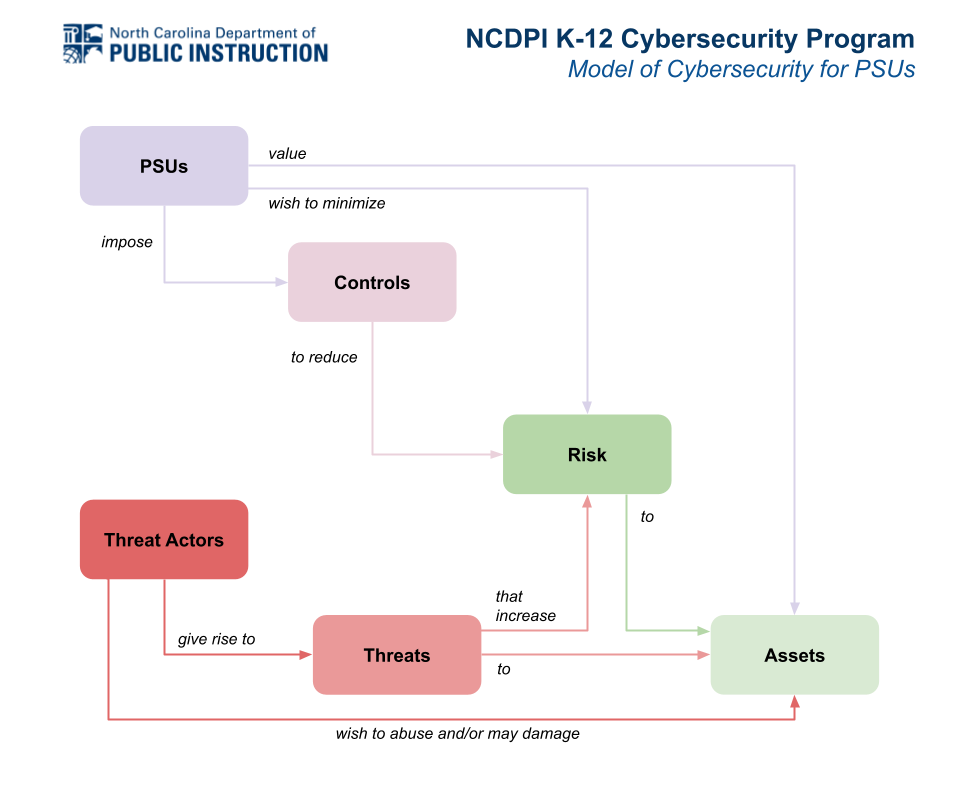
The NCDPI K-12 Cybersecurity Program developed the
Model of Cybersecurity for PSUs as a visual representation and narrative of the key concepts and relationships across the cybersecurity landscape.
This model is based on Common Criteria Common Criteria for Information Technology Security Evaluation General Model.
Essentials
The essential cybersecurity actions and practices that every PSU must adopt to mitigate risks effectively to have strong cyber hygiene. The NCDPI K-12 Cybersecurity Program has selected a subset of the CIS Controls and Safeguards as the essential steps PSUs need to prevent, detect, and respond to the most common types of attacks. These are referred to at the NC K-12 CORE Safeguards. A detailed list of these safeguards are provided in our NC K-12 CORE Safeguards with Service Mappings reference document.
Approach
To execute this strategy, the K-12 Cybersecurity Program supports PSUs through a five-step approach:
- The Why
- Help PSUs understand why cybersecurity is important through continuous
learning about fundamental cybersecurity concepts, threats, and risks.
- Help PSUs understand why cybersecurity is important through continuous
- The What
- Provide PSUs with a curated checklist, the NC K-12 CORE Safeguards, that
outlines what they need to do to achieve strong cyber hygiene.
- Provide PSUs with a curated checklist, the NC K-12 CORE Safeguards, that
- The How
- Support PSUs in achieving these goals by providing a comprehensive set of
statewide Cybersecurity Services and Resources at no cost.
- Support PSUs in achieving these goals by providing a comprehensive set of
- Strategy and Documentation
- Help PSUs define their cybersecurity strategies and document their
implementation progress through the PSU Cybersecurity Program Plan.
- Help PSUs define their cybersecurity strategies and document their
- Evaluate and Measure
- Evaluate and measure progress through the PSU Cyber Hygiene Assessments
to support continuous improvement.
- Evaluate and measure progress through the PSU Cyber Hygiene Assessments
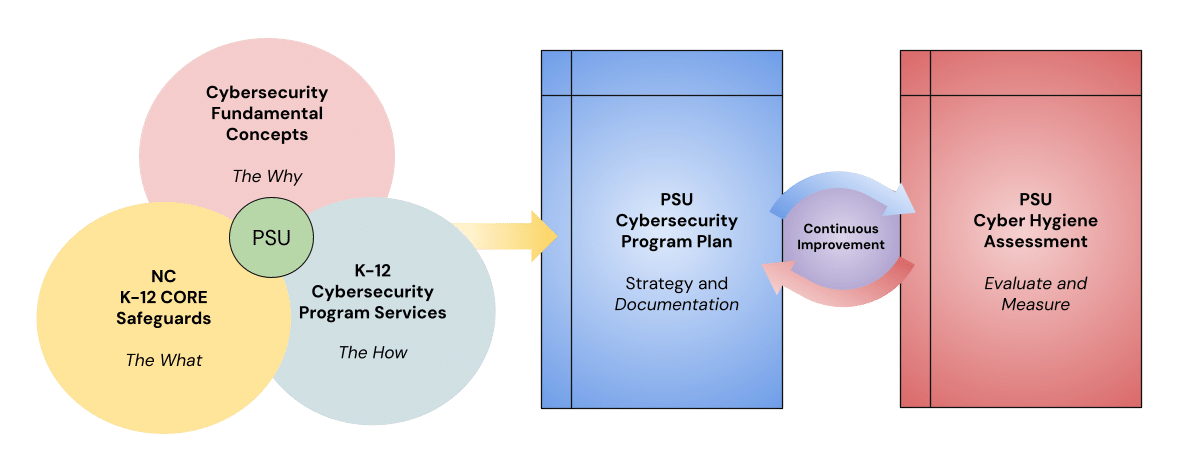
By formalizing the strategic components with our 5 step approach, the NC K‑12 CORE helps North Carolina PSUs create a proactive, comprehensive cybersecurity strategy that raises overall awareness of cybersecurity threats, provides a prioritized list of actions to mitigate those threats, and offers services and resources to achieve goals.
This strategy not only improves the cybersecurity posture of North Carolina K‑12 educational organizations but also supports a secure digital learning space for students and teachers.